20 Good Tips For Picking Anti-Termite Services In Jakarta
Wiki Article
Post-Construction Barriers Against Termites In Jakarta
The majority of Jakarta residents believe that protection against termites is in place, but the foundation remains unprotected. This is prior to when the concrete is poured and walls constructed. This is a false assumption. Property owners are convinced that after the slab is cast, their only option is chemical trenching, which involves repeated application of terminicides that break down in Jakarta's alkaline soils and high humidity. This notion has been rendered obsolete due to the development of retrofit barrier systems. These are installed through perimeter excavations that are mechanically attached to foundations that are already in place. Post-construction barriers are a great way to secure the site prior to construction. Both technologies are different and have different performance features. Jakarta anti-termite products that can't offer both are locked out of the fastest-growing segment of the market for urban pest control.
1. Physical Barriers Exist and Are Retrofittable
Installation of stainless steel mesh bonded soil granules or polymer membranes infused with slow-release pesticides can be applied to existing structures. This involves excavation around the perimeter as well as soil removal as well as barrier installation and mechanical attaching to the wall of the foundation. This process is expensive, disruptive and long-lasting. Jakarta exterminators who insist that the only way to get rid of them is injecting liquids every year are not presenting the latest technology.
2. Liquid Barriers Degrade; Physical Barriers Do Not
The termiticides' hydrolysis when applied to soil in Jakarta is increased. The half-life of active ingredients is diminished by several months during times when temperatures are high, pH is alkaline, and there's a lot of rain in the dry seasons. Physical barriers -- mesh, sheet, and graded-stone-- do not degrade. Their performance for exclusion for the tenth year is comparable to year one. Chemical barriers are not as efficient for customers who want to spend more money on permanence.
3. It's not widely advertised yet, but it's a hidden benefit
Polymer sheet barriers are constructed to both ward off termites, as well as stop capillary moisture from soil migrating into masonry. Drier foundations mean drier timber. Drier timber is undetectable timber. Termites won't attack wood they cannot detect. The anti-termite service that offers retrofits sells two treatments for the price of just one. They should include both in their client proposals.
4. Partial Perimeter Is Not a Barrier
Jakarta's dense urbanization (party walls, adjoining constructions, paved roads) often prevents excavation of the entire perimeter. Underground bypass's science is often misrepresented by companies who sell only parts of the installation. Termites walk around the open ends. It is correct to call the process "partial perimeter intervention" with documented gap exclusions. The homeowner should know what is unprotected.
5. Bekasi Adoption Signal
Jakarta metropolitan area has already begun implementing physical retrofitting. The first greenfield construction companies to adopt this technology aren't in Menteng or Kebayoran. Instead, they are located in Bekasi. Jakarta exterminators who only monitor central Jakarta's tenders are likely to not see this pattern. Physical barriers are adopted in secondary cities and migrates to the north.
6. Specification for Architects Overrides Substitution of Contractor
Emporio Architect et autres firms have now specified barrier systems for renovation documents. Anti-termite firms are contractors in the value chain. They are not in control of the specifications. To move sales away from homeowners to architectural firms, structural engineers and pest control firms will have to change their approach. Selling a retrofit to a property owner is transaction economics. Annuity economics is one way to be included in the architect's master specification.
7. The Additive Depletion Curve Boosts Infused Chemistry
Liquid termiticides are spread on the soil's surface and begin to decay when they get to the surface. Barriers made of polymer contain additives that are infused in the matrix during manufacturing. They only deplete along the exposed edges of the barrier, and follow a diffusion curve measuring decades. Physical barriers come with the assurance of being actuarially sound. Five-year warranty on liquid barriers is only speculative.
8. It is the accessibility to the excavation site that decides feasibility.
Access to the bucket is the only constraint for post-construction barriers and not budget. The minimum clearance for mini excavators is 60 centimeters in proximity to the foundation. Geometrically speaking, properties with zero-lot-line constructions, shared driveways and hardscapes for landscaping that are set close to the wall are not suitable. Anti-termite companies must conduct access audits before the quoting process, and not after mobilization.
9. ESG Reporting creates Commercial Demand
Indonesian corporations that have sustainable practices, like multinational tenants and green building applicants, can now track carbon emissions that are embedded into buildings. Broadcasting liquid termiticides emits CO2 equivalent emissions. Physical barrier installation--one-time excavation, mechanical fastening, zero recurrent chemical application--qualifies as emissions reduction. Jakarta exterminators that work with corporate clients must divulge the carbon equivalents or risk losing their bids.
10. Retrofit Barriers require different warranties
Pre-construction barriers are guaranteed against termites infiltrating the barrier plane. This warranty is not applicable for post-construction barriers since they do not completely enclose the structure, but just the accessible part of its perimeter. The proper warranty language is "exclusion of treated zones" and not "protection of the entire structure." Oversold protection is a frequent myth among homeowners. Documenting exactly what was installed, and what is vulnerable, helps exterminators to close claims quicker and keep customers.
Conclusion
Jakarta's termite barriers to post-construction are situated at the intersection of three convergent trends that have been documented as a degradation of soil-applied chemicals in urban environments that are tropical architects-led specification for permanent physical systems; corporate require pest control strategies that are compatible that incorporate carbon accounting frameworks. Anti-termite companies that insist on referring to post-construction termite prevention as trenching with chemicals, are not securing their market share. They are protecting their customers from the effects of obsolescence. The equipment required--mini-excavators, core drills, mechanical fasteners--is capital-intensive but one-time. The necessary training--soil assessments access auditing, as well as warranty documentation -- is knowledge-intensive however it is transferable. Bekasi was the first step to the new barrier era. In just 24 months the barrier era will arrive in Jakarta. Early adopters will have two years of advantage over those who wait to see if clients demand it. Retrofitting may not be an acceptable option. It's not about whether or not you want to be first or second in this market. Follow the recommended jasa anti rayap for website info including penyebab rayap di lemari, jasa anti rayap, perusahaan pest control, penyebab rayap, rayap lemari, anti rayap, jasa rayap, cara membasmi rayap di lemari kayu, jasa basmi rayap, rayap lemari and more.
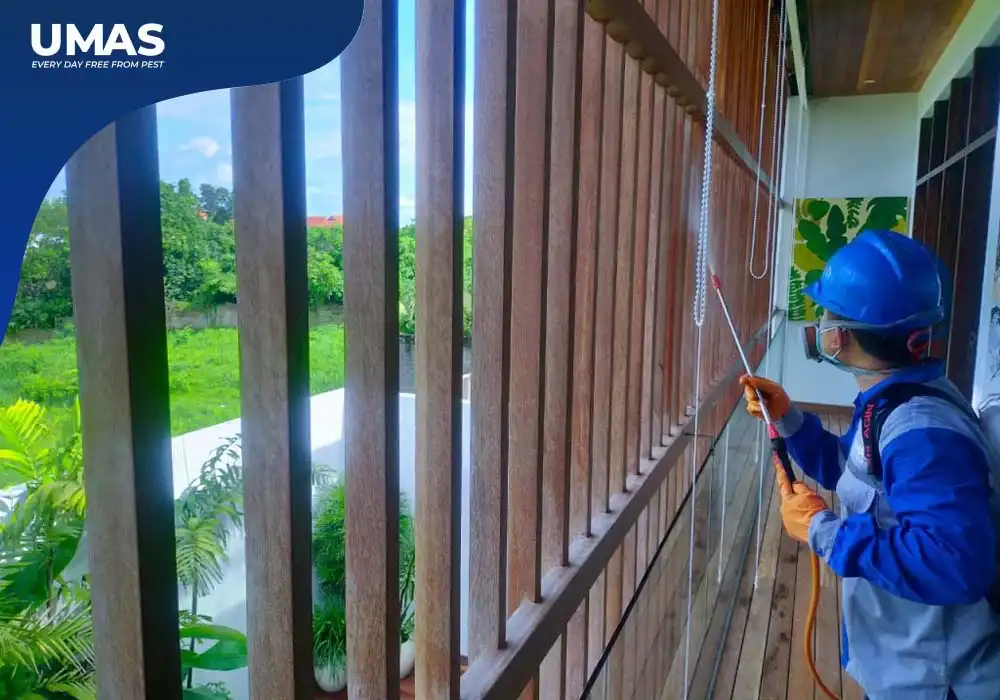
The Tropical Climate Of Jakarta Indonesia Poses Constantly Threatening Termites
Pest control franchises in temperate regions ship equipment, chemical formulations and training manuals to Jakarta only to find out that, after 18 months, there is no solution. It is not a defect within the product. Tropical urban climates invalidate the assumptions that are embedded in the products. Jakarta's termites don't observe an end to winter foraging as there is no winter season in Jakarta. The soils of Jakarta remain hot and humid throughout the throughout the year. In Menteng Menteng, the same patterns of consumption of bait like those found in Melbourne are not effective due to the high humidity. Anti-termite companies who view Jakarta as a humid variant of the temperate market are likely to deliver subpar outcomes. Jakarta is a special location. It operates in its own environment.
1. Zero Foraging Downtime, 365 Days
Temperate termite populations cease to hunt when the soil temperature falls below 15 degrees Celsius. Coptotermes gestroi Microtermes insperatus and Jakarta's daily and annual temperature variations are all within the range of active foraging Coptotermes. There is no seasonal window for treatment. There is no month which is suitable to renovate. Three hundred sixty-five pressures daily are required to follow the colony elimination protocol.
2. Humidity Exceeds the Cuticle Tolerance
Termite cuticles desiccate below seventy percent relative humidity. The humidity in Jakarta ranges from 75-80 percent. The wet season exceeds ninety percent. They have to hunt for food continuously due to the need to ensure their balance of water. The constant threats aren't exaggerations; they are a biological necessity.
3. Chemical Half-Life contracts by Months
The combination of moisture and temperature accelerates hydrolysis. In Jakarta termiticides for soil with a six-month efficacy is only efficient for three to four months. The termite prevention service that provides a 12-month guarantee on treatments that use liquid barriers is either over-concentrating applications or misrepresenting the remaining life or using predictable reapplications as a business expense.
4. Silty Clay can be used to construct colonies.
Jakarta's predominant urban soil type Compact silty Clay holds enough moisture to draw subterranean termites. If the content of water in soil is higher than twenty-two percent, termites are more likely to take over the environment. Exterminators that apply chemicals without first determining the soil's moisture levels treat the symptoms, but do not alter the conditions of the habitat.
5. The most preferred wood species are construction defaults
Coptotermes curvignathus is a the wood species of mangium, pine, and light red Meranti. They are used for framing, joinery as well as other tasks for middle-class houses in Jakarta. Teak can be two to three time more expensive than merbau, which deters termites from feeding. The Jakarta construction market has selected the termite-friendly timber.
6. Fungus-Growers Dominate, Coptotermes Destroys
Jakarta's termite assemblage is numerically dominated by Microtermes insperatus and Macrotermes gilvus--Termitidae-family fungus-growers that require soil contact and organic debris. Coptotermes Gestroi is not as common however it causes structural damage. In the case of termite control services that are focused on Coptotermes only, they are misrepresenting Jakarta's true species composition.
7. Green Spaces are Colony Reservoirs.
The remaining urban forest patches in Jakarta, the cemetery groves and neglected rail corridors, support the parent colonies, which extend foraging tunnels into adjacent residential blocks. The nine Hazard Class One sub-districts united by a characteristic: the presence of significant vegetative cover. The homes in these zones can't be protected by property line treatment alone. To eliminate colonies at a the neighborhood level, it is essential to coordinate baiting across many properties.
8. Construction Activity manufactures Habitat
Jakarta's urban development does not eliminate termite colonies but it does create new habitats. Imported fill, irrigation of landscaping and buried construction waste provide ideal conditions to establish colonies. A newly constructed residential estate in BSD is not termite-free. It was a breeding ground which began when the trees were planted.
9. Imported Timber bypasses Quarantine
Tanjung Priok has been a important containerized hub for shipping termites. Pallets infested with termites, manufactured wood items and other products are also shipped from Jakarta to ports that are temperate. This bidirectional flow enables continual genetic exchange, thus preventing isolation of colonies. Arriving container ships add to Jakarta's pressure on termites every month.
10. Climate Migration Boosts Populations in Source
As global temperatures rise the previously inaccessible habitats of the Javanese highlands will be suitable for species of lowland termites. Parents colonies that have been established at higher elevations during warmer years survive mild winters and expand their foraging range downslope. Jakarta isn't the only place being savaged by the local colony. Jakarta is being hounded by a growing population front migrating from cooler refugia that no longer function as refugia.
The conclusion of the article is:
The expression "tropical climate and perpetual termite threat" is not a marketing slogan. This is a description for operational purposes. Jakarta anti-termite treatment services should calibrate the rate of application of chemicals for accelerated decay, position bait station to use all year long, and test the soil moisture before each treatment and distinguish between structurally destructive Coptotermes and numerically dominant Coptotermes. Markets reward companies for complaining about difficult conditions. It rewards services that adapt protocols to changing conditions and report outcomes. The climate of Jakarta should not be used as an excuse to not treat patients. It is this variable that distinguishes generalist exterminators who use imported protocols from specialists who have created Jakarta specific methods. Homeowners are able to distinguish between these two categories. They can tell the difference between these categories by paying premium rates for those in the second group, but refusing to renew with the first. Take a look at the recommended anti rayap jakarta for blog recommendations including kayu anti rayap, cara membasmi rayap kayu, anti rayap untuk kayu, jasa anti rayap bandung, penyebab rayap di lemari, jasa anti rayap tangerang, jasa anti rayap bandung, jasa pembasmi hama, kayu tahan rayap, cara membasmi rayap di lemari kayu and more.
